Showing posts with label Roe v. Wade. Show all posts

Monday, February 15, 2016

To Justice Scalia, With Love

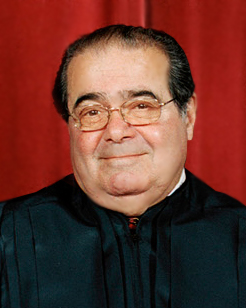
Justice Antonin Scalia
Antonin Scalia was appointed Supreme Court Justice by President Ronald Reagan in 1986. He died in his sleep on February 13, 2016. Justice Scalia was a unique and brilliant man who had the ability to  grapple with highly sophisticated legal theory and then explain that theory and his opinions in a way that was not only easy to understand, but was also engaging and endearing. Reading Supreme Court opinions is often a dull exercise, but not with Justice Scalia. He was exceedingly honest in his writing, which made his decisions and dissents come alive and gave us a true insight into his character, his mind, and his heart.

Justice Scalia was an originalist. He believed that the Constitution should only be applied to those topics that were discussed in the original (and subsequently altered) text and that all attempts to interpret the Constitution should strive to align as closely to the original intent of the document as possible. Scalia believed that the Supreme Court was limited by this view, and rightly so. Any issue that did not appear in the Constitution should not be decided upon by nine unelected justices. Instead, those issues should be decided by the people and their representatives.

Originalism doesn't lead to great and quick change, which is why it, as a theory, is often so ardently opposed. What originalism does, however, is protect democracy and freedom. It keeps the United States from being governed by a group of unelected officials and leaves the majority of issues to the people to decide.

I'm heartbroken that we have lost Justice Scalia. He was a rare breed of high intellect who had the special ability to bring lofty ideas down to a level where the rest of us could understand. He was man of high moral character and sensibilities, but he never confused his personal opinions for the opinions of the Constitution. He understood that his role as Justice was not to impose his will or beliefs, but to impose the stated purpose of the Constitution.

His seat will now become a battleground and this is a battle that I am not excited to see played out.  However, before the battle began,  l wanted to take a moment to remember Justice Scalia and and to explain why he isn't a figure that will quickly pass from my mind. Thank you Justice Scalia, for a career that was devoted to protecting our freedom and our Constitution. Thank you for your wit, your desire to make law understandable, and for your courage to maintain your convictions in a world where your convictions were doggedly under fire.

"God assumed from the beginning that the wise of the world would view Christians as fools...and he has not been disappointed....If I have brought any message today, it is this: Have the courage to have your wisdom regarded as stupidity. Be fools for Christ. And have the courage to suffer the contempt of the sophisticated world." - Antonin Scalia, 2012


Tuesday, August 11, 2015

Abortion: The Right to Privacy

This is the second post in a series about abortion rights. To read the first post, click here

Women can have abortions because the Supreme Court believes that abortions are a private matter between a woman and her doctor. The Court argues that all people have an inherent "right to privacy" that protects them from inappropriate government intrusion and this "right to privacy" is at the heart of the abortion debate. Conservatives generally believe that the right to privacy is a fabrication that you won't find if you read the Constitution word for word. Liberals will argue that it is an idea that is fundamental to the Constitution, even if it isn't explicitly stated and furthermore, that it is good and right for the Constitution to evolve as society's needs evolve. Regardless of your legal preferences, for the pro-life movement to succeed in overturning Roe v. Wade, the issue of the right to privacy must be dealt with. Today I want to discuss how the right to privacy was created and how I think it can be used to the benefit of the pro-life movement.

It is a common misconception, and one I held until recently, that Roe v. Wade created the right to privacy, which was the legal foundation for allowing abortion on demand. The idea was not created by the Supreme Court in 1973, it was actually an idea that had been around since the late 1800's and it had even appeared in Supreme Court cases from the 1960s. Discussing the right to privacy may seem like a gigantic yawn of a conversation, but today I want to argue that understanding its creation is important when considering how the Supreme Court can overturn Roe v. Wade.

Sandra Day O'Connor
In 2007 I watched a fascinating interview with Sandra Day O'Connor. She was asked why she upheld Casey v. Planned Parenthood (a 1991 case that provided the Court with an opportunity to limit or outlaw the practice of abortion). O'Connor was a Reagan appointee and was widely believed to oppose abortion rights, so her decision to uphold Roe was surprising. O'Connor stated that the right to privacy was established law. She went on to discuss the idea of precedent and how she felt it was not her role to re-write law, it was her role to interpret law. Therefore, in her role as Supreme Court justice she could interpret the right to privacy, but she could not revoke it. I tell this story because I think that O'Connor's reasoning is one of the biggest hurdles facing the pro-life movement. If the Supreme Court throws out the right to privacy, it will throw out 100 years of rulings that have been built upon the right to privacy, and most of them have nothing to do with abortion rights. It should be easy for us to understand the Court's reluctance to take this step. However, I don't believe that is the only way the Court could curtail or abolish abortion rights, and, even more than that,  I don't think it is a realistic option. Today I want to explain the evolution of the right to privacy and put forward my thoughts on how the Supreme Court could feasibly uphold the right to privacy while also abolishing abortion rights.

The 14th Amendment


The term "right to privacy" was first put forward in the early 1900's, but the groundwork for its creation was laid in 1868. Three years after the end of the Civil War the United States ratified the 14th Amendment to the Constitution. This amendment covered a variety of topics, but we're primarily concerned with a section known as the Due Process Clause. It states:

No state shall make or enforce any law which shall abridge the privileges or immunities of citizens of the United States; nor shall any State deprive any person of life, liberty, or property, without due process of law; nor deny to any person within its jurisdiction the equal protection of the laws.

If this language sounds familiar, it is because you've read most of it before in the 5th Amendment. Prior to the 14th Amendment, the protections that were guaranteed in the Bill of Rights were only applied to the federal government. It was the job of the states to determine what protections the state governments would provide to its citizens (see Barron v. Baltimore). For example, prior to the 14th Amendment, the federal government had to protect your right to bear arms, but your state governments did not. This should sound bizarre to you because it is completely foreign to our modern understanding of the Constitution. The 14th Amendment ushered in the idea that all governments, not just the federal government, had to uphold certain rights detailed in the Constitution.

With this amendment the federal government wanted to ensure that emancipated slaves were granted full citizenship and that they enjoyed all of the benefits, privileges, and protections that accompany that citizenship. This amendment may seem fairly innocuous, but in the years following its ratification, it became the foundation upon which the legalization of abortion was built.

The Evolution of Due Process Rights

When due process rights were added to the Constitution via the Bill of Rights, they specifically encompassed those protections afforded individuals who are interacting with the justice system. They are important rights because they make sure that police and the courts can't abuse their power. Due process rights include the right to an attorney, the right to face your accuser in court, the right to a fair and speedy trial, and the right of habeas corpus. Prior to 1868, the U.S. Constitution's Due Process Clause only applied to federal investigations and federal court, but after the ratification of the 14th Amendment, all courts and all investigative agencies were required to provide those protections to citizens. 

However, in the years following the ratification of the 14th Amendment, the Due Process Clause changed. The rights that were historically associated with due process were now referred to as "procedural due process rights." Over time, lawyers and judges began to suggest that just as the due process clause protected citizens against government overreach in regards to law enforcement, it also protected citizens against government overreach in their private lives as well. This new protection became known as "substantive due process" and most famously appeared in the Supreme Court case Lochner v. New York.

Substantive Due Process

The right to contract was one of the first "rights" granted to United States citizens that is not explicitly stated in the Constitution. The Supreme Court suggested that it was an implied right and that rights implied in the Constitution are protected alongside of those rights that are explicitly stated. The right to contract evolved over several decades and came to prominence in the court case Lochner v. New York (1905). The United States was in the middle of the Industrial Revolution and state legislatures were trying to figure out how protect their citizens from companies that demanded long hours and which provided low pay and unsafe working conditions. Several states began to pass laws that limited the number of hours an employer could demand of their workers and in Lochner v. New York, the Supreme Court struck those laws down. They argued that employees have an inherent "right to contract" and that they are able to negotiate the terms of their employment and if they have agreed to the hours required by their employer, then the state cannot infringe upon that agreement. Over time the right to contract fell out of use legally, but the creation of substantive due process rights, rights implied in the Constitution, but not stated outright, left a lasting legacy on the Supreme Court.

The "Right" to Privacy

Inferred rights made a splash in the legal world during the 1890s. The term "yellow journalism" refers to journalism that is sensational and that uses shocking headlines in order to sell newspapers and many began to fear that as technology advanced (i.e. portable cameras) the press would use these new inventions to invade people's private lives in order to make a profit. Two lawyers, Louis Brandeis and Samuel Warren began to consider how law could protect citizens from this invasion. In an article titled, "The Right to Privacy" they stated, "It is our purpose to consider whether the existing law affords a principle which can properly be invoked to protect the privacy of the individual; and, if it does, what the nature of that protection is." Published in 1890, the article was immediately influential and was referenced in the majority opinion in the 1965 Supreme Court case Griswold v. Connecticut. Griswold marked the formal creation of the right to privacy by the Supreme Court, which was referenced 8 years later in Roe v. Wade.

Realistic Expectations

Conservatives take issue with the right to privacy because it is, in their mind, an embellishment to the Constitution. They argue that if the Founding Fathers wanted to place privacy in the list of endowed and protected rights, then they would have included it in the original text of the Constitution. Conservative legal theory argues that the court system was designed to interpret law, not to create law and that if such a "right" were truly necessary, then the legislative branch would be the appropriate branch to grant such a right. By arguing for a right to privacy, the Supreme Court effectively created a new protection that had previously not existed.

Hopefully, however, we are not outraged at abortion rights because the Supreme Court is using liberal legal theory to support them. Abortion rights are alarming because they sanction murder. Asking the Supreme Court to overturn over 100 years of legal precedent is a huge request, and one that I think is unrealistic. If the pro-life movement continues to advocate for a termination to the right to privacy, I believe that they are fighting a losing battle. I believe the pro-life movement must weigh the issues at hand and determine which outcome is the most important. Do we want to achieve conservative legal rulings or do we want to outlaw abortion? It's clear to me which objective is the most morally pressing and if the pro-life movement continues to advocate for both goals, I believe that they will achieve neither. However, if we focus on achieving an end to abortion rights, we can find a path that will lead to success.

My suggestion is to fight one battle instead of two. Consider the right to privacy, in this instance, as set law. Reason and logic support the argument that life begins at conception and convincing the Court of an unborn child's personhood should be the main goal of pro-life lawsuits. If the Court wants to uphold substantive due process rights and the right to privacy, let them apply them to all individuals, and not just those who have a birth certificate.

The gruesome videos released by the Center for Medical Progress bring into shocking focus the hypocritical arguments put forward by Planned Parenthood. In one situation they argue that an unborn child is nothing more than tissue and a collection of cells, while in another setting they discuss the sale of human heart, lungs, and livers. That unborn children are people cannot be questioned and we should press this issue again and again with the Court until they recognize that a women's "right to choose" takes a back seat to a person's "right to life."

Friday, August 7, 2015

Republican Fisticuffs: A Summary of the Debate

Oh, what a blissful introduction to the 2016 campaign season last night was! There were so many candidates on stage that you could only keep a few of them on your mind at any given point and when a forgotten member of the cadre spoke up, it was like a hidden present found on Christmas morning. Aside from the genuinely bizarre statements proffered by Donald Trump, and I'll have more thoughts on him in a moment, I was incredibly impressed with the quality of responses given by the candidates last night. I went into this debate with the specter of Rick Perry hovering in my mind. Will we have another candidate who forgets point three of his three point plan? Geez. But no! While I don't agree with all of the positions taken by the candidates, I was incredibly impressed with how reasonable and well spoken they were. The last two Republican primary cycles have largely been a lesson in buffoonery, but after last night I am optimistic that a new day has dawned.

So, in case you missed it, here is a summary of my favorite responses of the evening. Enjoy!

Ted Cruz

Prior to the debate, I had all but written Ted Cruz off. His reputation in the Senate is one that is divisive and argumentative and his campaign doesn't seem to have any traction. However, every single one of his responses last night were spot on. He was clear, compelling, and established himself as a contender in this election. In a response to a question regarding the relationship between Russia and Iran, Cruz demonstrated thorough knowledge of foreign affairs and even invoked the memory of Ronald Reagan. Not bad Ted, not bad.


Ben Carson

Every single answer Ben Carson gave was brilliant. Every. Single. One. He alone was the candidate who thoughtfully and thoroughly answered the question asked. Unfortunately for Carson, he isn't charismatic. He speaks slowly and deliberately, and while that allows him to answer well, it doesn't engage the audience. I could pick any one of his answers to display here, but I will end with his answer to how he would help race relations in the United States. It is a beautiful response.


Marco Rubio

Marco Rubio was excellent last night. In fact, I might say that Rubio walked away the winner from last night's debate. He looked fresh and youthful and his responses were informed and well-spoken. His best answer came in his response to a question about his stance on abortion.


Rand Paul

Rand's closing remarks were perfect. He closed with, "I'm a different kind of Republican" and he's right. He demonstrated that over and over again in the debate. It is clear that Rand Paul has a rigid ideological framework that guides his decision-making and honestly, I find that incredibly attractive in a candidate. That framework gives the voter confidence that they can accurately guess how their candidate/politician will respond to any given situation. Rand Paul used his closing statement to make a thoroughly convincing argument that he should be the party's nominee.


Jeb Bush

Jeb Bush didn't stand out last night. Overall, his responses weren't awful, but they weren't inspiring either. He was a forgettable component of last night's debate, but that may not be a bad thing. Of all the candidates, he came into the debate with the most credibility and had the most to lose from a bad debate. He didn't stumble. He didn't say anything compelling either. However, I am going to credit him with the best debate answer of the night. When responding to a question asking whether he called Donald Trump a "clown," his response was a textbook example of a pivot response. He quickly responded to the question and then used it as a platform to reiterate his campaign talking points. Brilliant. 


Donald Trump

I was prepared for cringe inducing statements from "The Donald" and he didn't disappoint. There were so many times when I was completely befuddled by his lack of focus. Make no mistake, Donald Trump is brilliant. He is clearly a strategist on par with Bobby Fisher and his entire campaign up until this point proves that. Donald Trump is a man of strong feelings, but last night demonstrated that he has not molded those strong feelings into reasoned arguments and inspiring plans of action. Last night left me wondering, "does he really think that he can win the presidency, or is this an elaborate, and expensive, attempt to direct the national conversation?" If he thinks he can win the presidency, he may not be as brilliant as I have given him credit for. If he is trying desperately to mold the debate, then he is brilliant and more. Donald Trump's Republican credentials may be dubious, but his ability to shape this primary season has been shockingly powerful. People clearly like blunt honesty and Mr. Trump has given that to them in hefty doses. I can't find a video that I consider Trump's best, instead I am posting a video that I think was his worst. Megyn Kelly asked Trump when he became a Republican and his response was not reassuring.


If subsequent debates are anything as compelling as last night's event, then this is going to be a great campaign season.


Wednesday, August 5, 2015

Abortion: The Weight of Conviction

I've sat in a room with a woman who was telling me about her abortion. She was crying and wondering aloud if her inability to get pregnant again was actually God punishing her. I've seen videos of doctors and clinicians discussing abortion casually and even jokingly. I've read articles and books, watched interviews and documentaries. I knew what abortion was, I knew that it was evil, and still I chose not to act or speak out because I was afraid of offending and of ostracizing.  I have dear friends who support a woman's right to choose and I also have friends who have chosen to abort. In our hostile political environment I rationalized that communicating my position in private conversations was preferable to boldly committing myself to actively engage in the fight to end abortion. I didn't want to be what I so often was in college: an aggressive, insulting, and cruel zealot that associated being Christian with voting Republican. I didn't want to bring shame on Christ and the church because of my harsh and unloving approach to hot-button political issues.

However, over the past three weeks, it has become abundantly clear to me that I can no longer follow the path of passive resistance. I've watched all of the videos that have been released by the Center for Medical Progress and every time I see a news update or read an article concerning the videos, my heart is squeezed by my conscience and I feel like a fraud. Abortion isn't just any political issue. It snuffs out the life of the most vulnerable members of society.  If there was ever a cause that compelled followers of Christ to wade into a political debate, this is it. If there was ever a time for Christians to stand on the rooftops and cry out for justice, it is now. We should be known for celebrating and valuing life and fighting to protect it and I am convinced that we can do this in a way that is compassionate and loving towards those who oppose our views and to women who have had abortions. Taking a stand doesn't have to mean insulting or denigrating the other side. It doesn't have to involve shaming people who have made a choice that we disagree with. It is a fine line to walk, to be sure, but it can be done. In this instance, it must be done.

On many other issues, it may be wise and prudent to remain silent for the sake of the gospel, but silence on the issue of abortion allows the abortion industry to continue its relentless slaughter of God's precious creation. Silence on this issue affirms the practice and if speaking out about the issue brands me as a radical, then I will embrace the title and consider myself a radical who is passionately committed to laboring for the lives of my unborn brothers and sisters. William Wilberforce crusaded to end slavery. He was reviled, insulted, and slandered. His example is a challenging one and his words are stirring, "If to be feelingly alive to the sufferings of my fellow creatures is to be a fanatic, I am one of the most incurable fanatics ever permitted to be at large." In this moment, I think it would be an honor to be considered an "incurable fanatic."

So now what? My conscience has been sufficiently pricked and I am convinced that inaction on the issue of abortion is no longer an acceptable option. What do I do and, I think more importantly, how do I do it?

  1. Speak Out- Let your representatives in government know exactly where you stand on the issue. Don't just limit this to national leaders either. States have enormous influence in the fight to limit and/or end abortion. Contact your state and local representatives and your governor to emphasize this issue. Politicians' jobs depend on your vote. If enough people communicate their interest and passion about a topic, the politician will listen.
  2. Get Active- Look for ways to be a physical presence in this fight. On August 22, pro-life groups around the nation are protesting outside of Planned Parenthoods in their communities. Consider joining them. Additionally, 40DaysforLife is an organization that is committed to praying for an end to abortion. They are a constant presence of hope at abortion clinics all around the world. 
  3. Love Women and Babies- Show the love of Christ to men and women who are scared and hurting by supporting your local crisis pregnancy center. These centers provide a wonderful service to families. They provide pregnancy testing, sonograms, counseling, education, and a place of safety and support. Volunteers are always needed and if you don't have time to give, consider donating. The fight to end abortion is taking place on the national scale and on the local scale and both fronts are vitally important.
  4. Show Conviction with Grace- If you find yourself wondering, "how do I oppose abortion while also showing love and compassion to women and men who have had abortions?" strive to embrace conviction with grace. Demonstrating conviction with bombastic and insulting remarks isn't furthering the gospel of Christ. Paul writes to the Corinthians, "If I speak in the tongues of men and of angels but have not love I am a noisy gong or a clanging cymbal." Instead, we should strive to demonstrate conviction while also loving, encouraging, supporting, and respectfully engaging with those who oppose our views or who have at one time embraced that which we condemn. Love is patient and kind, it is not arrogant or proud or rude or self-seeking. And importantly, love keeps no record of wrong. Showing conviction with grace demonstrates a humble heart that embraces grace for all because it is a heart that acknowledges the reality its own dark sins and its desperate need of salvation.

Over the next few weeks I am going to post a series of articles that I've written on the topic of abortion. I am going to address the right to privacy and provide a little background on how it came to be associated with abortion. I am also going to discuss the difficult issue of abortion in the case of rape or incest or when the mother's health is at risk. These are hard topics but they are important. Finally, I am going to discuss the role that crisis pregnancy centers play in the fight to end abortion and combat the oft repeated criticism that the pro-life movement only cares about babies in the womb. As always, my goal is to push myself to think about hard issues and I hope that you will join me in this conversation and comment with thoughts of your own.

I am posting links to the videos released by the Center for Medical Progress. I am also posting a speech given by Oklahoma Senator James Lankford. It is powerful and well worth your time to watch.

Center for Medical Progress Videos (edited and unedited versions)
Senator James Lankford Speech (video and transcript)


Monday, January 23, 2012

Meet Jane Roe

On January 22, 1973 two landmark decisions were handed down by the Supreme Court. Roe v. Wade granted access to abortion on demand up to the first trimester of pregnancy and then made abortion in the second and third trimesters contingent upon the health of the mother. The second decision handed down that day was Doe v. Bolton, which effectively allowed abortion up until birth by its incredibly broad definition of "health":
We agree with the District Court, 319 F. Supp., at 1058, that the medical judgment may be exercised in the light of all factors - physical, emotional, psychological, familial, and the woman's age - relevant to the well-being of the patient. All these factors may relate to health.
The end result of these two decisions was that all women were now legally able to receive an abortion up until the moment of birth, if their doctor agreed that their physical, emotional, familial or psychological health were at stake. By now we all know the ramifications of these two decisions. In the past 39 years, approximately 50 million babies have been aborted. There are plenty of topics to delve into when discussing abortion, an endless supply of statistics to consider, but at the heart of this controversy were two women forever known as Jane Roe and Mary Doe. Their court cases have forever altered the moral landscape in the United States and likewise, they have forever altered the lives of these two women. Today I want to write about the story of Jane Roe, also known as Norma L. McCorvey.

AddThis